OpenAI's 722 mathematics manuscripts: citations, withdrawals, and proof dependencies
OpenAI released 722 AI-produced mathematics manuscripts on 6 October. The next day, three were withdrawn and 14 others revised.
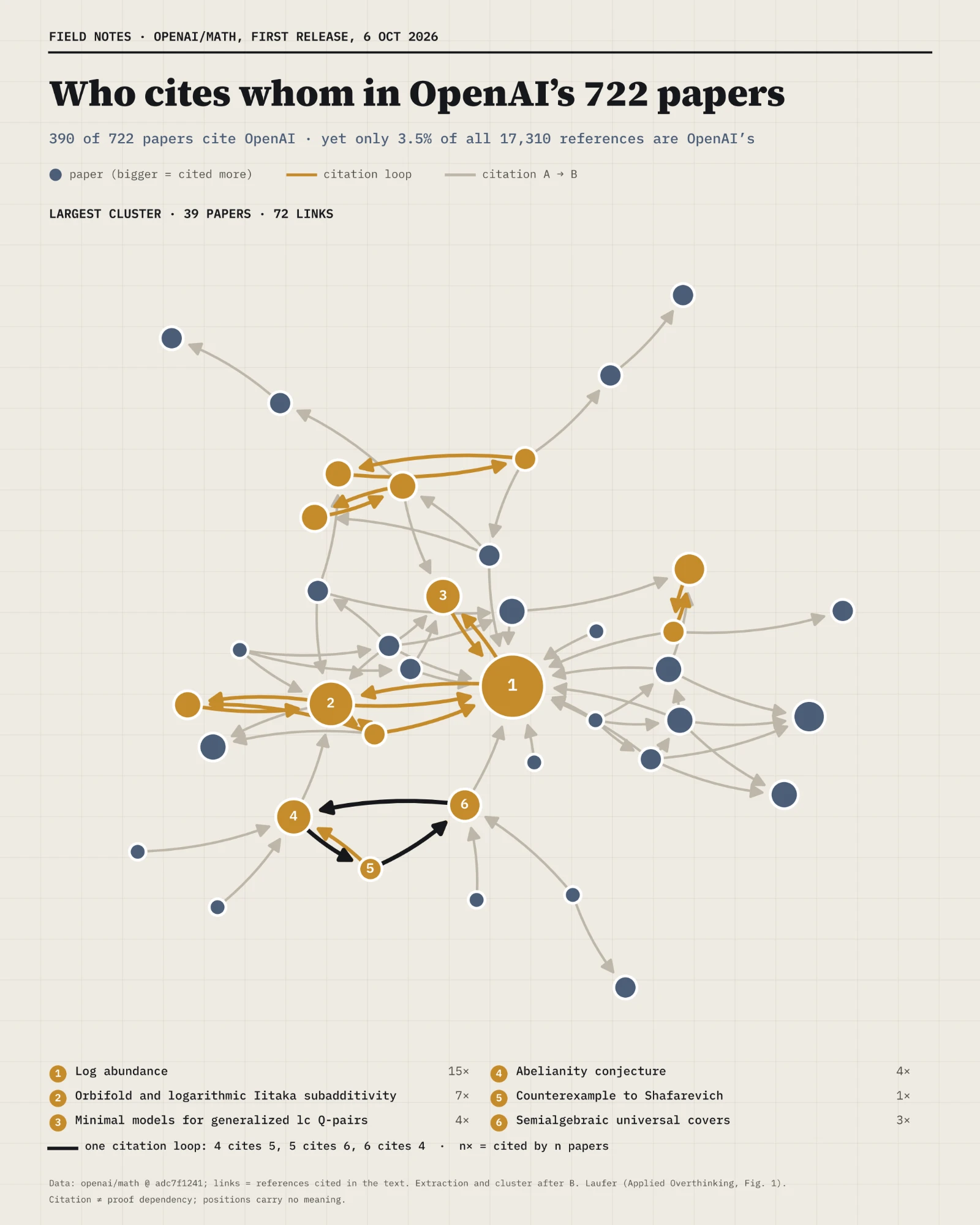
Benjamin Laufer found that 390 of the 722 cite at least one OpenAI-authored work. Using his code, we reproduced the counts. OpenAI-authored work accounts for 3.5% of all cited references. Most citation loops connect manuscripts with the same date label, as companion papers would. As Laufer notes, a citation loop alone does not establish a circular proof.
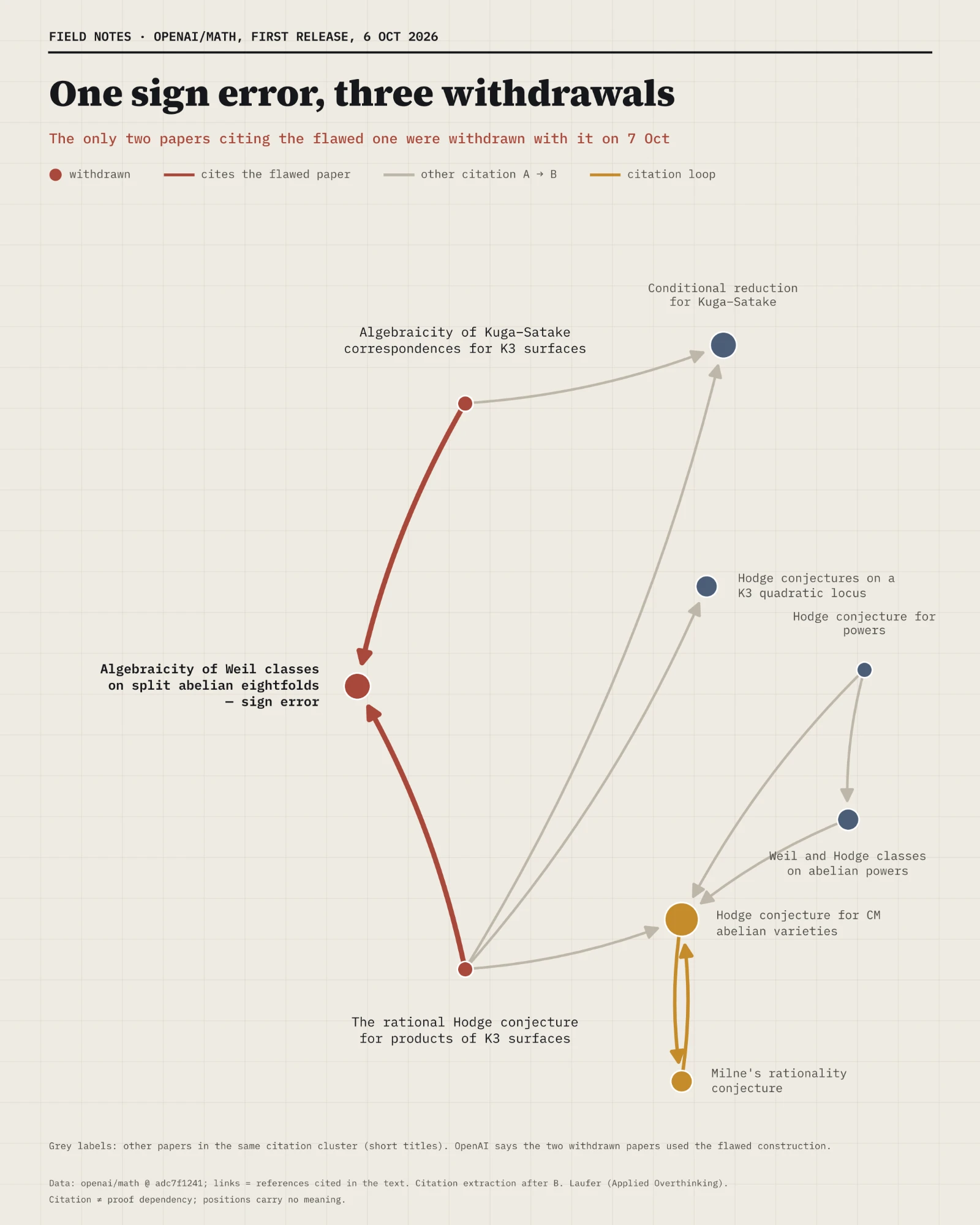
The withdrawals show why proof dependencies matter. A sign error invalidated an argument in one manuscript. The only two manuscripts citing it were also withdrawn. OpenAI says two dependent papers used the flawed construction.
OpenAI reports that about 42% of the main results have been formalized in Lean. A release of this size also needs a clear record of what was checked, which results each proof relies on, and what must be reviewed again when an argument fails.
With releases like this, the bottleneck in mathematics may be shifting from proving to believing.