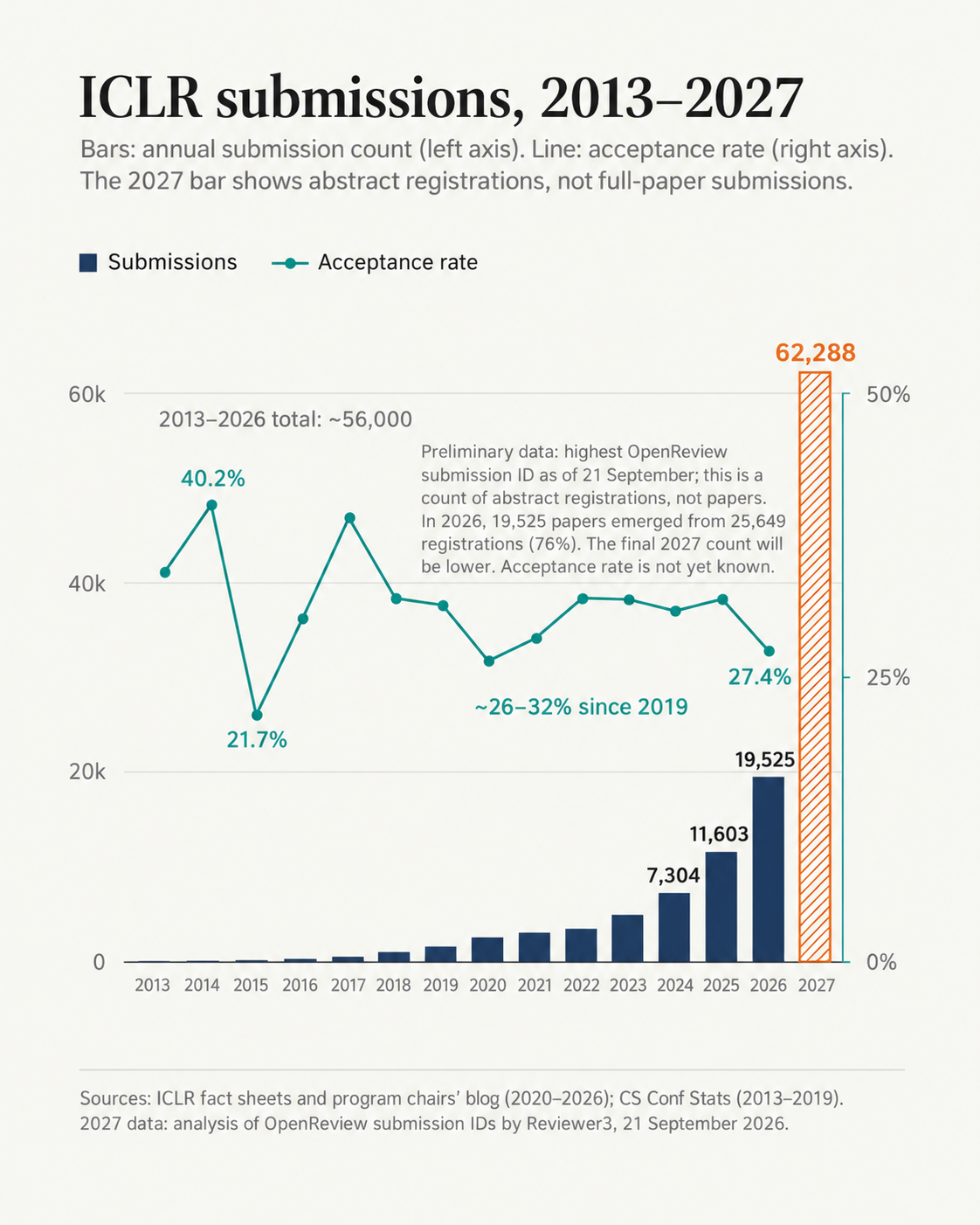
ICLR 2027 registrations and the peer-review workload
The post reports more than 60,000 abstract registrations for ICLR 2027, a count it compares with submissions from 2013–2026. It notes that the 2027 figure represents abstract registrations rather than full-paper submissions, in part because authors awaiting NeurIPS decisions may also register with ICLR.
It discusses proposals for managing the review workload: submission fees or reciprocal reviewing, limits on submissions per author, automated checks of code and data, shorter papers, staged review, and changes to reviewer selection and incentives. It also notes possible drawbacks, including strategic behavior around limits, the fallibility of reproducibility checks, and the risk that payment rewards speed rather than judgment. The post argues that incentives tied to publication counts are a central issue.