An AI second brain can remember everything and still be wrong
Old facts return, notes disagree, and agents write faster than people can review. Search finds what looks relevant without knowing whether it is current or supported.
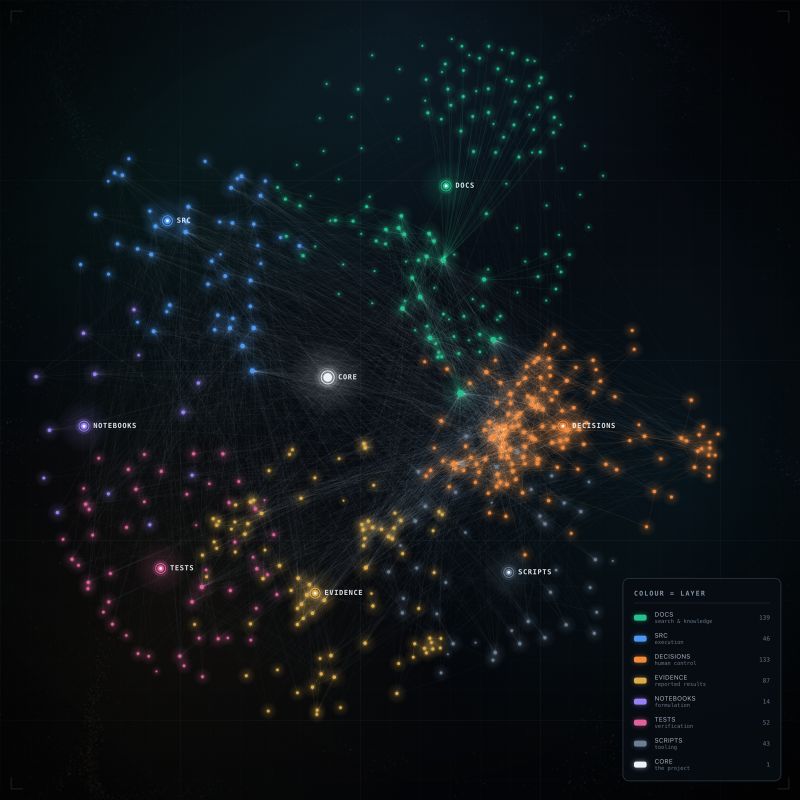
The structure shown below addresses this through eight connected layers:
- CORE: current project facts
- DOCS: models, assumptions, and scope
- SRC: code that runs
- DECISIONS: what changed and why
- EVIDENCE: results and provenance
- NOTEBOOKS: exploration kept separate
- TESTS: automated checks
- SCRIPTS: repeatable experiments
These methods are not new. Their value comes from how they connect.
A key parameter can be traced from its source and decision record to the value in the code, the check that verifies it, and the experiment behind the result. The graph shows this path without deciding what is true.
Agents propose. Evidence, checks, and people decide. A failed check blocks acceptance until the mismatch is resolved. Hallucinations still happen, but the model has less to guess and errors are easier to trace.
If you are building a second brain:
- Give each changing fact one owner.
- Keep replaced decisions.
- Link claims to code, checks, and evidence.
- Use search to find records, not to decide what is true.
- Add the vector database last.
Which rule is missing from your system?